Duties and Functions of an Aquaculture Analyst
Duties and Functions of an Aquaculture Analyst
Job Summary An Aquaculture Analyst collects, analyzes, and interprets biological, environmental, and operational data to improve productivity, sustainability, and profitability of aquaculture operations. This role supports farm managers, researchers, and company leadership by providing actionable recommendations based on scientific methods and data-driven insights.
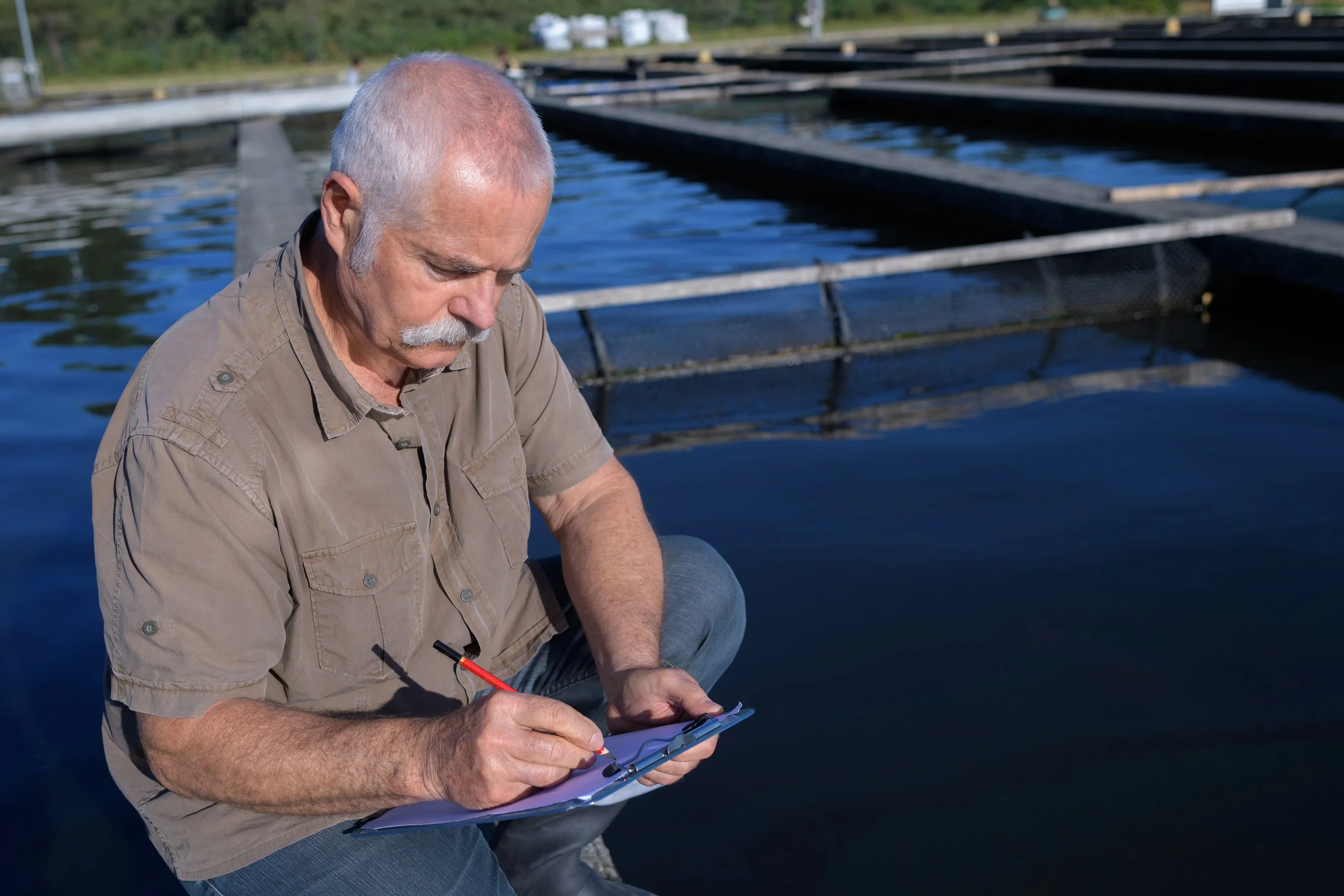
a person who analyzes fish farming
Key Duties and Responsibilities
Data Collection and Monitoring
Design and implement monitoring programs for water quality, feed usage, growth rates, disease incidence, and mortality.
Conduct regular sampling of water, sediment, and animal tissue; perform or coordinate laboratory analyses (e.g., dissolved oxygen, pH, ammonia, nitrite, pathogen screening).
Maintain accurate records and databases for production, environmental parameters, inputs, and outputs.
Data Analysis and Reporting
Analyze production and environmental data using statistical tools to identify trends, correlations, and root causes of performance issues.
Prepare clear, concise technical reports and dashboards for farm managers and stakeholders, including recommendations and risk assessments.
Forecast production outcomes and model scenarios for stocking density, feed rates, and harvest schedules.
Health Management and Biosecurity
Monitor stock health and detect early signs of disease, stress, or nutritional deficiencies.
Advise on biosecurity protocols, quarantine procedures, and sanitary measures to prevent disease introduction and spread.
Coordinate with veterinarians and diagnostic labs for sample submission and interpretation of results.
Feed and Nutrition Optimization
Evaluate feed performance, conversion ratios, and feeding practices to optimize growth and reduce waste.
Recommend feed formulations or adjustments based on species, life stage, and water conditions.
Monitor feed storage and handling to prevent spoilage and contamination.
Environmental Management and Compliance
Assess environmental impacts of farm operations and advise on mitigation measures (waste management, effluent treatment, habitat protection).
Ensure compliance with local and national aquaculture regulations, permits, and environmental standards.
Prepare documentation for audits and regulatory reporting.
Production Planning and Operational Support
Support hatchery, nursery, and grow-out operations with stocking plans, harvest scheduling, and capacity planning.
Provide technical guidance for system design and operational improvements (ponds, cages, RAS, aeration, filtration).
Participate in cost-benefit analyses for new technologies or changes in operational practices.
Research, Trials, and Innovation
Design and oversee experimental trials to evaluate new feeds, probiotics, husbandry methods, or disease treatments.
Collaborate with research institutions, extension services, and industry partners to translate research findings into practical applications.
Keep abreast of scientific advances and industry best practices; recommend adoption of relevant innovations.
Training and Capacity Building
Train farm staff on sampling techniques, record-keeping, animal handling, and best management practices.
Develop standard operating procedures (SOPs), manuals, and training materials.
Promote a culture of continuous improvement and evidence-based decision making.
Risk Management and Business Support
Identify operational risks (disease outbreaks, environmental events, feed supply disruptions) and develop contingency plans.
Contribute to budgeting, cost control, and performance metrics for production units.
Provide input to marketing or product quality teams regarding product specifications and quality assurance.
Required Qualifications and Skills
Educational background: Bachelor’s degree or higher in aquaculture, fisheries science, marine biology, biology, or related field. Advanced degrees preferred for research-intensive roles.
Technical skills: Water quality analysis, disease diagnostics, statistical analysis, data management, and familiarity with aquaculture systems (pond, cage, RAS).
Practical experience: Hands-on experience in farm operations, hatchery work, or field research.
Soft skills: Analytical thinking, clear technical writing, communication and training ability, problem-solving, and teamwork.
Certifications (desirable): Aquaculture biosecurity, fish health, laboratory handling, or relevant local regulatory certifications.
Performance Indicators
Improvements in growth rates, feed conversion ratio (FCR), and survival rates.
Reduction in disease incidence and mortality.
Compliance with environmental and regulatory requirements.
Timeliness and usefulness of reports and recommendations.
Successful implementation of trials or operational changes with measurable benefits.
Work Environment and Reporting
Works on-site at farms, hatcheries, and laboratories; occasional field travel required.
Reports to farm manager, technical manager, or head of production; collaborates with veterinarians, engineers, and quality teams.
This concise job description outlines typical duties and functions for an Aquaculture Analyst and can be adapted to specific species (tilapia, shrimp, carp, salmon, etc.), scale (smallholder to commercial), and operational systems.