How does the Arapaima fish live in nature
Arapaima, among the largest freshwater fish, inhabits slow-moving rivers, floodplains, oxbow lakes, and lagoons of the Amazon Basin. They prefer warm, oxygen-poor waters where aquatic vegetation and submerged structures offer shelter. Arapaima are obligate air-breathers: they possess a vascularized swim bladder that functions like a lung, requiring them to surface periodically (typically every 5–15 minutes, longer when resting) to gulp atmospheric air. This adaptation allows them to thrive in hypoxic environments during dry seasons and in stagnant floodplain pools.
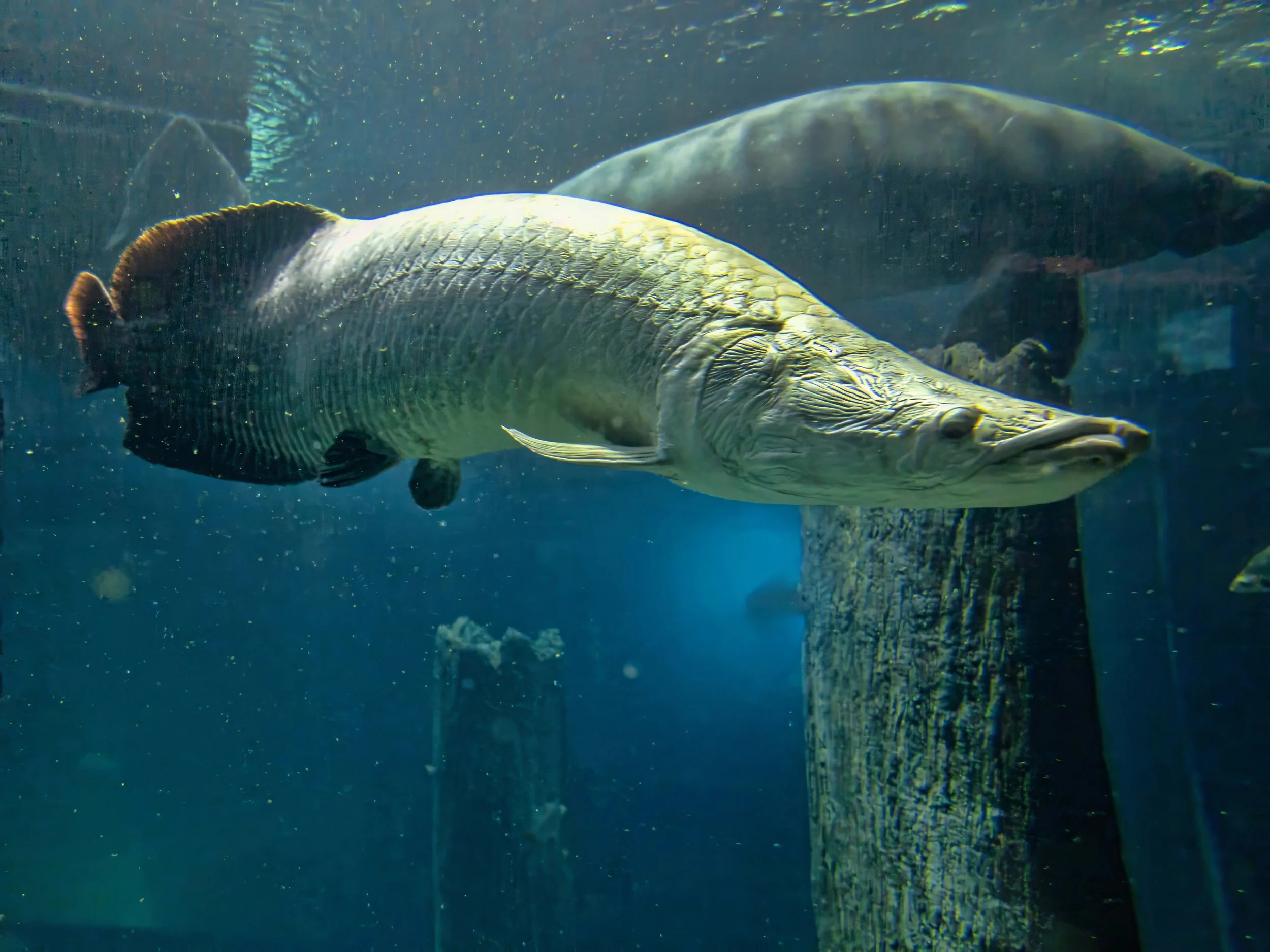
Arapaima
Feeding behavior is opportunistic and primarily piscivorous. Arapaima hunt by ambush and rapid suction feeding—using a sudden expansive mouth movement to draw in prey—targeting fish, crustaceans, and occasionally fruits or small terrestrial animals falling into the water. Their size and strength let adults consume relatively large prey.
Reproduction is seasonal and linked to the annual flood pulse. Spawning generally occurs at the start of the flooding season when rising waters create nutrient-rich nursery habitats. Males and females excavate shallow nests in flooded vegetation or sandy substrates. Parental care is notable: males guard eggs and young, sometimes secreting mucus to feed larvae (deriving nutrition and possibly immune benefits). Juveniles use flooded vegetation as refuge until they grow large enough to fend for themselves.
Arapaima are long-lived and slow-maturing, reaching sexual maturity several years after birth. Natural predators of juveniles include larger fish, birds, and caimans; adults face few predators due to size but are vulnerable to humans. Overfishing and habitat alteration (damming, pollution, deforestation reducing floodplain connectivity) have fragmented populations, making conservation and regulated harvest important for maintaining their ecological role as top freshwater predators in the Amazon.