Ecological, Economic, and Socio-Cultural Roles of Anabas testudineus: A Comprehensive Overview
Anabas testudineus (climbing perch) plays multiple ecological, economic, and cultural roles across its native and introduced ranges. Key roles and functions include:
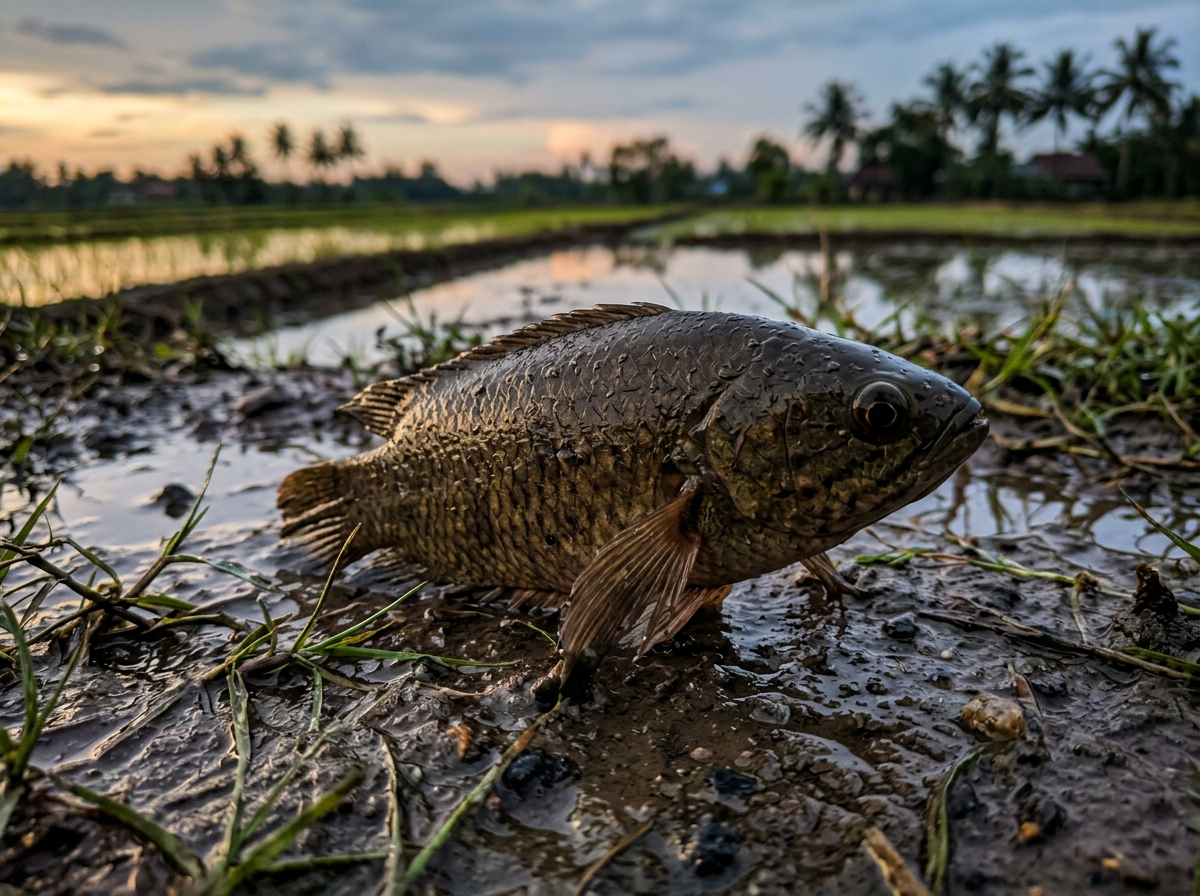
Photo created with AI
Ecological roles
Trophic interactions: Anabas is an omnivorous, opportunistic feeder—consuming insects, crustaceans, small fish, detritus, and plant matter—positioning it as both predator and prey. It helps regulate populations of benthic invertebrates and small fish, influencing food-web dynamics in freshwater habitats.
Nutrient cycling: By foraging across substrates and consuming detritus, Anabas contributes to the breakdown and redistribution of organic matter and nutrients within ponds, swamps, rice fields, and slow-moving streams.
Habitat colonization and resilience: Its ability to survive in low-oxygen, degraded, or hypoxic waters (thanks to accessory respiratory organs) enables Anabas to persist where other species decline, maintaining some aquatic community function and serving as a buffer species in disturbed systems.
Vector of ecological change: In regions where it is introduced, Anabas can become invasive—competing with native fish for food and habitat, preying on native juveniles, and altering community composition and ecosystem processes.
Physiological and behavioral functions
Air-breathing adaptation: Anabas possesses a specialized labyrinth organ (accessory respiratory structure) that allows atmospheric oxygen uptake, enabling survival in hypoxic waters and temporary overland movement. This organ is central to its ecological niche and dispersal abilities.
Terrestrial locomotion: Its capacity to crawl short distances over moist ground using pectoral fins facilitates migration between isolated water bodies, aiding colonization and persistence during dry periods.
Reproductive strategy: Spawning often occurs in sheltered shallow vegetation; eggs and juveniles contribute to seasonal pulses in prey availability for larger predators. High reproductive output supports rapid population recovery after disturbances.
Economic and socio-cultural roles
Aquaculture and fisheries: Anabas is cultured and harvested for local consumption across South and Southeast Asia. It is valued for its hardiness, ability to thrive in low-input systems (rice-fish culture, backyard ponds), and market demand in local food markets.
Livelihoods: Small-scale fishers and rural households depend on Anabas as a reliable protein source and income, particularly in areas where other species are less tolerant of degraded conditions.
Traditional medicine and cuisine: In some cultures, parts of Anabas are used in traditional remedies; it also features in local culinary dishes appreciated for its flavor and texture.
Management considerations
Because of its invasive potential and resilience, monitoring and management are needed where introductions threaten native biodiversity. In aquaculture, good husbandry and containment practices minimize escape and spread.
Overall, Anabas testudineus functions as a resilient, ecologically influential species with substantive local economic importance, while also posing conservation challenges where introduced.