Hypsophrys nicaraguensis is a freshwater cichlid commonly known as the Nicaraguan cichlid or "señorita" in the aquarium trade. Native to Central America (especially the Atlantic slope of Nicaragua and adjacent Costa Rica), it is a medium-sized, laterally compressed fish valued for its attractive coloration, active behavior, and relative hardiness.
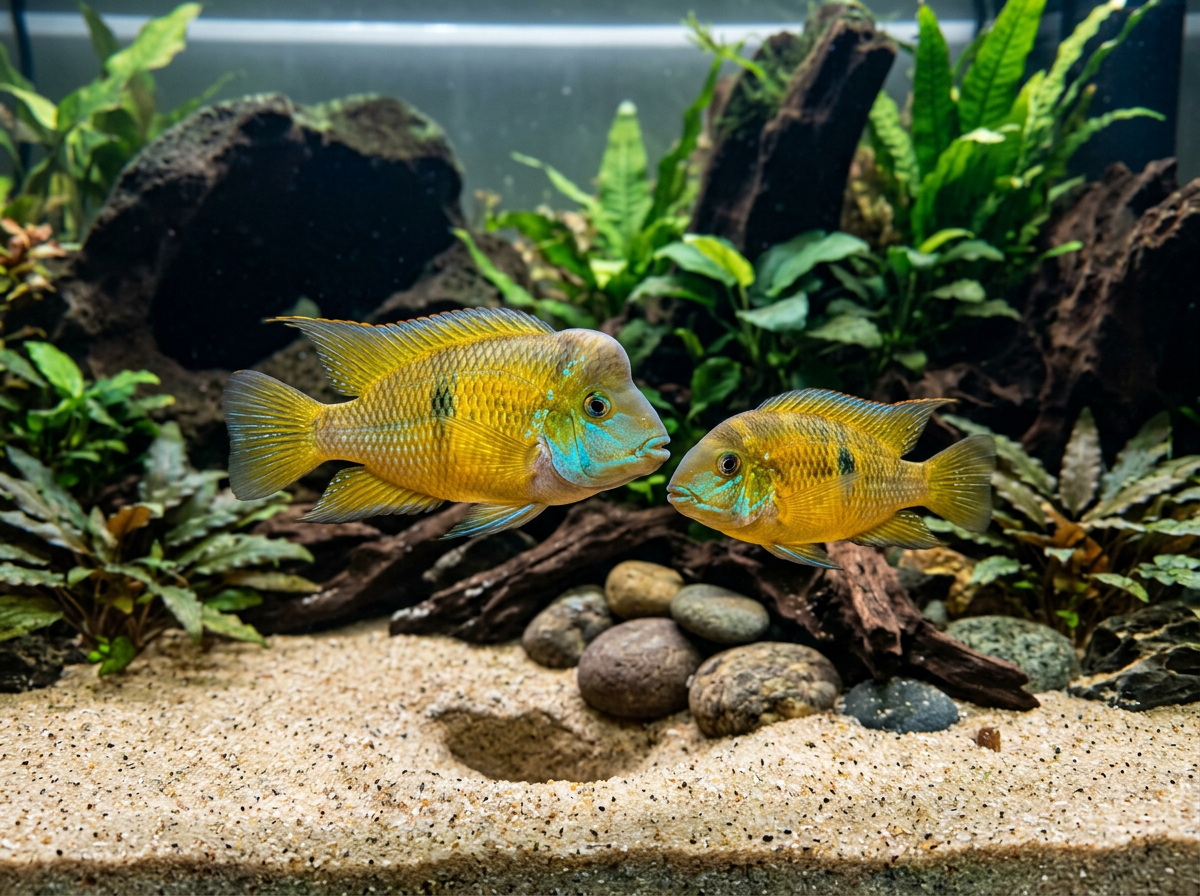
Hypsophrys nicaraguensis (Photo created with AI)
Key facts
Size: Typically reaches 15–20 cm (6–8 inches) in captivity; males usually larger than females.
Appearance: Pale to golden body with iridescent blue-green highlights and faint vertical bars; breeding males develop more intense coloration and a nuchal hump in some cases.
Behavior: Semi-aggressive cichlid. Territorial during breeding but generally less aggressive than many larger Central American cichlids. Can be kept in community tanks with robust, similarly sized tankmates if space is adequate.
Diet: Omnivorous — accepts a variety of foods including high-quality pellets/flakes, frozen or live foods (brine shrimp, bloodworms), and vegetable matter. Feed a varied diet for best coloration and health.
Water and tank requirements: Prefers tropical conditions — temperature 24–28°C (75–82°F), pH 7.0–8.0, moderate to hard water. Minimum tank size about 200–280 liters (55–75 gallons) for a pair; larger if keeping multiple individuals or community setups. Provide rockwork, driftwood, and open swimming areas; fine sand substrate is essential as they exhibit heavy digging behavior.
Breeding: Pit spawners that form monogamous pairs. Unlike most cichlids, they lay non-adhesive (non-sticky) eggs. They dig deep pits or depressions in the sand (often inside caves) where the eggs lay loosely. Both parents guard the eggs and fry ferociously. In some cases, females may display communal parenting (crèching).
Conservation/status: Not regarded as critically threatened; local population pressures vary. Captive breeding is common, reducing collection pressure on wild populations.
Use in aquaculture/agribusiness
Aquarium trade: Popular species for hobbyists and small-scale breeders. Marketable due to attractive looks and breeding ease.
Farming considerations: Breeding in captivity is straightforward for experienced hobbyists; maintain water quality, provide adequate space, and ensure a nutritionally balanced diet for broodstock to maximize fry survival and quality.
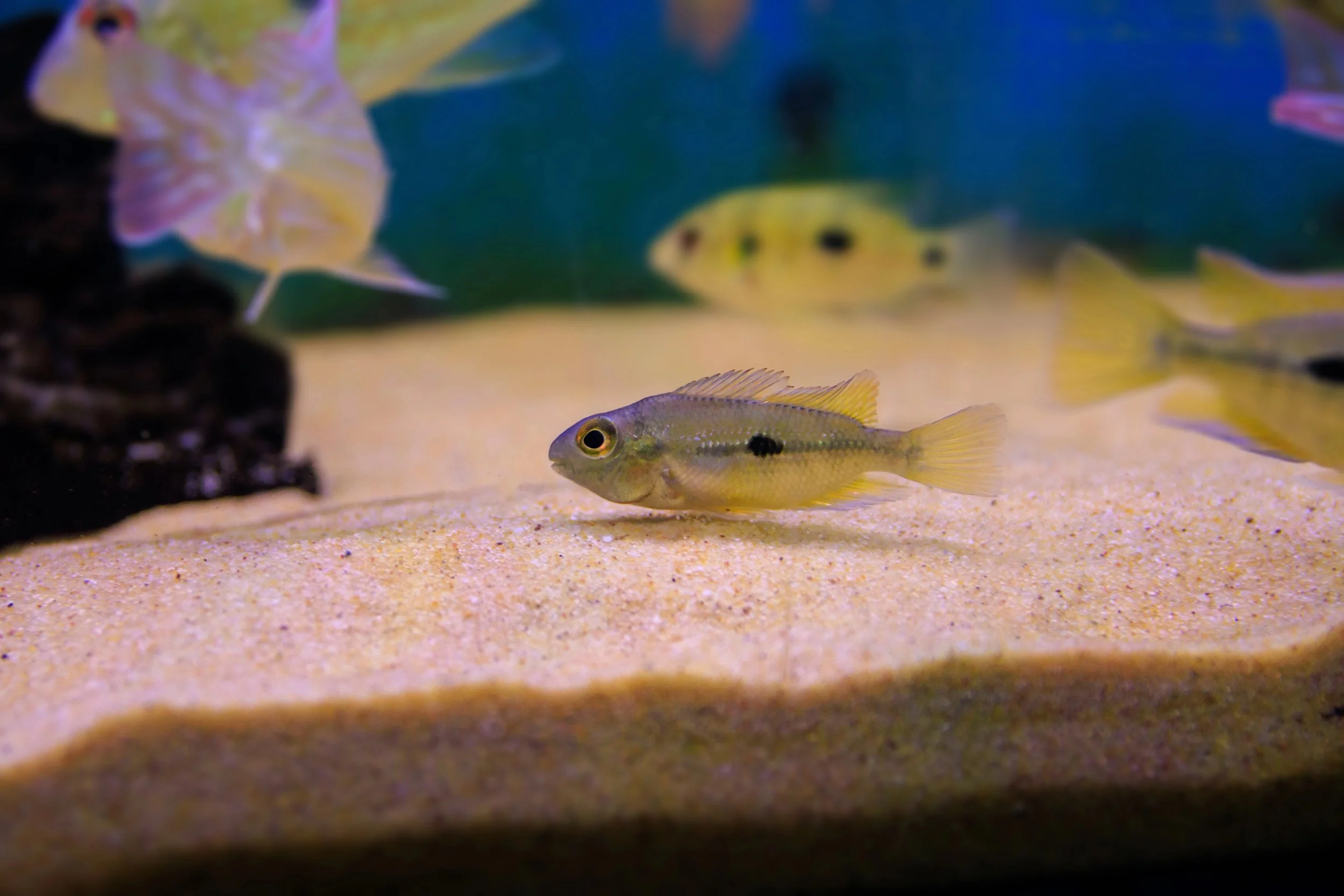
Hypsophrys nicaraguensis (depositphotos.com)
Overall, Hypsophrys nicaraguensis is a desirable species for intermediate aquarists seeking an attractive, active cichlid that is less aggressive than many other Central American cichlids but still displays interesting breeding and territorial behaviors.